

As a parent, few things are more rewarding than watching your little one grow. From the first time they hold your gaze to the moment they share a toy with a new friend, every milestone is a cause for celebration. While physical milestones like crawling and walking are easy to spot, a child’s social progress is equally vital to their overall development. Navigating the world of emotions, sharing, and communication sets the foundation for their future success, both in school and in life. For parents with children ranging from six weeks to five years old, understanding and supporting this social journey can feel overwhelming, but it is one of the most important gifts you can give your child.
The Foundation of Social and Emotional Growth
The first five years of a child’s life are a period of incredible brain development. During this time, they are like sponges, absorbing cues about how to interact with the world around them. Early childhood education plays a crucial role in shaping these interactions. When children are placed in a nurturing, structured environment, they learn how to navigate complex social dynamics. They discover how to take turns, express their feelings appropriately, and develop empathy for others. These early lessons are the building blocks of emotional intelligence, a trait that is heavily linked to lifelong happiness and academic achievement.
Studies consistently show the profound benefits of early childhood education. Children who participate in high-quality early learning programs tend to have better social skills, fewer behavioral issues, and a stronger ability to focus. They learn how to exist in a community outside of their immediate family, which is a critical step in their journey toward independence and self-confidence.
Understanding Social Milestones by Age
Social progress looks vastly different depending on your child’s age. For infants (6 weeks to 12 months), social development is all about attachment and trust. Smiling, cooing, and mimicking facial expressions are their primary ways of connecting. Toddlers (1 to 3 years) begin to engage in parallel play—playing alongside others rather than directly with them. This is also the stage where asserting independence becomes common. By the time they reach preschool age (3 to 5 years), children are ready for cooperative play. They start forming genuine friendships, understand the concept of sharing more clearly, and begin to grasp the feelings of those around them.
Ways to Foster Social Skills at Home
While a great early education program is invaluable, a child’s first and most important teachers are their parents. There are many simple, everyday activities you can incorporate into your routine to help your child blossom socially.
Model Positive Interactions
Children learn by watching the adults in their lives. When you say “please” and “thank you,” handle frustration calmly, and show active listening, your child is taking notes. Demonstrate the kind of social behavior you want to see in them. If you make a mistake, apologizing to your child teaches them accountability and models empathy in a highly relatable way.
Encourage Emotional Literacy
Help your child put words to their feelings. If your toddler is upset because a block tower fell, you might say, “I see you are feeling frustrated because your tower broke.” Giving them the vocabulary to express their emotions reduces tantrums and helps them communicate their needs effectively to peers and caregivers.
Create Opportunities for Play
Whether it is a trip to a local park or a structured playdate, giving your child the chance to interact with peers is essential. Do not step in immediately if a minor conflict arises over a toy; instead, guide them gently on how to negotiate and share. These small interactions teach vital conflict resolution and cooperation skills.
Partnering with the Right Daycare in Katy TX
Finding the right environment for your child to practice these evolving social skills is paramount. For families in our local community, finding a reliable daycare in Katy TX means looking for a place that feels like an extension of your home. At Scribbles Academy, we understand that true education goes far beyond the ABCs and 123s. We focus deeply on the social and emotional well-being of every child, from our six-week-old infants to our busy five-year-olds.
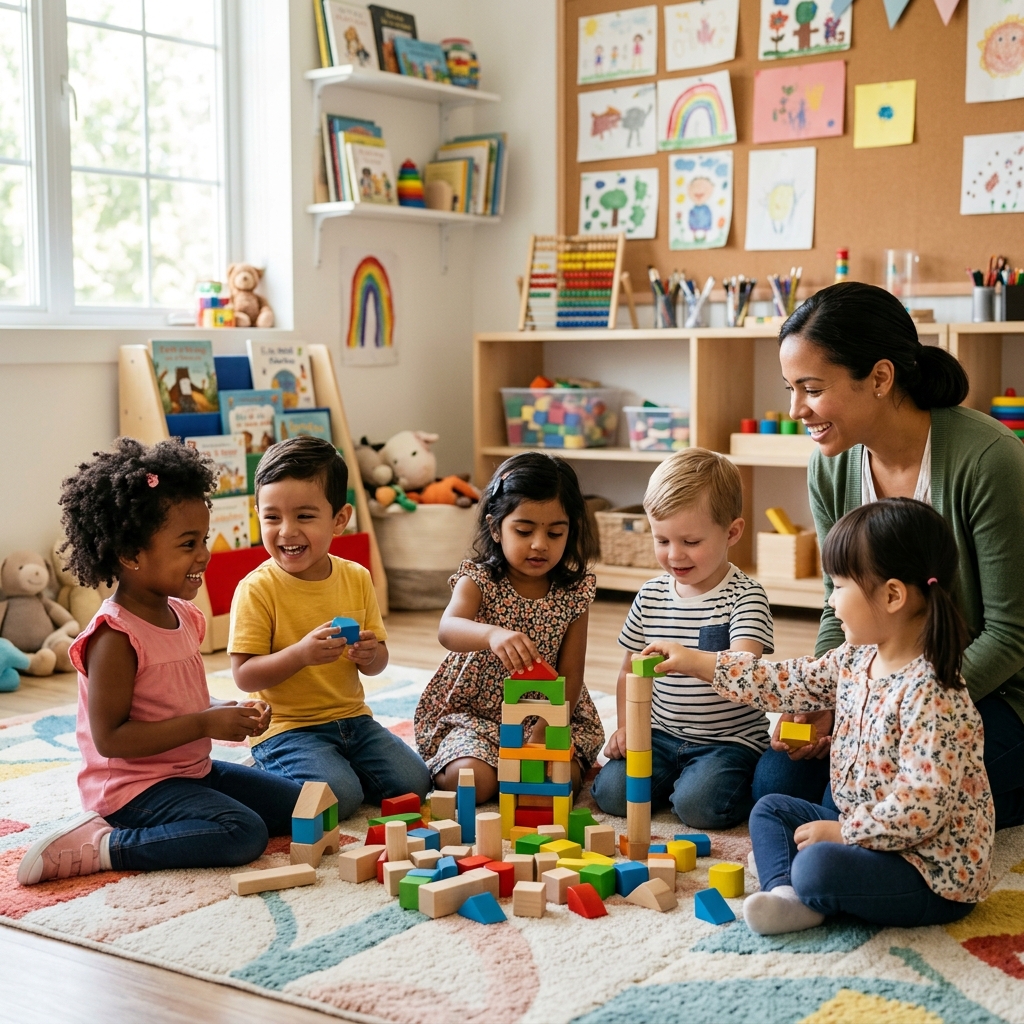
Our classrooms are intentionally designed to promote peer-to-peer interaction and cooperative play. Through guided activities, group circle times, and free play, children learn the delicate art of making friends and working as a team. Our experienced, compassionate educators are trained to gently guide children through social hurdles, ensuring that every child feels seen, heard, and valued.
A Curriculum Built on Connection
When you choose a preschool in Katy TX, you want a curriculum that balances cognitive growth with social progress. At Scribbles Academy, our daily routines provide the consistency that young children crave, which in turn makes them feel secure enough to step out of their comfort zones. Whether they are working together on an art project, singing songs in a group, or learning how to pass snacks during mealtime, every moment is an opportunity for social growth. We pride ourselves on creating a warm, trustworthy, and educational environment where parents feel completely confident leaving their little ones.
Guiding a child through their early social milestones is a beautiful, collaborative journey. When parents and dedicated educators work hand-in-hand, children develop the confidence and empathy they need to thrive in the world. Providing your child with a supportive, enriching environment during these formative years sets a trajectory for lifelong success and well-being. If you are looking for a nurturing space where your child can grow socially, emotionally, and academically, we invite you to experience our community firsthand. Schedule a tour at Scribbles Academy today to see how our dedicated team can support your family and help your little one reach their fullest potential.