

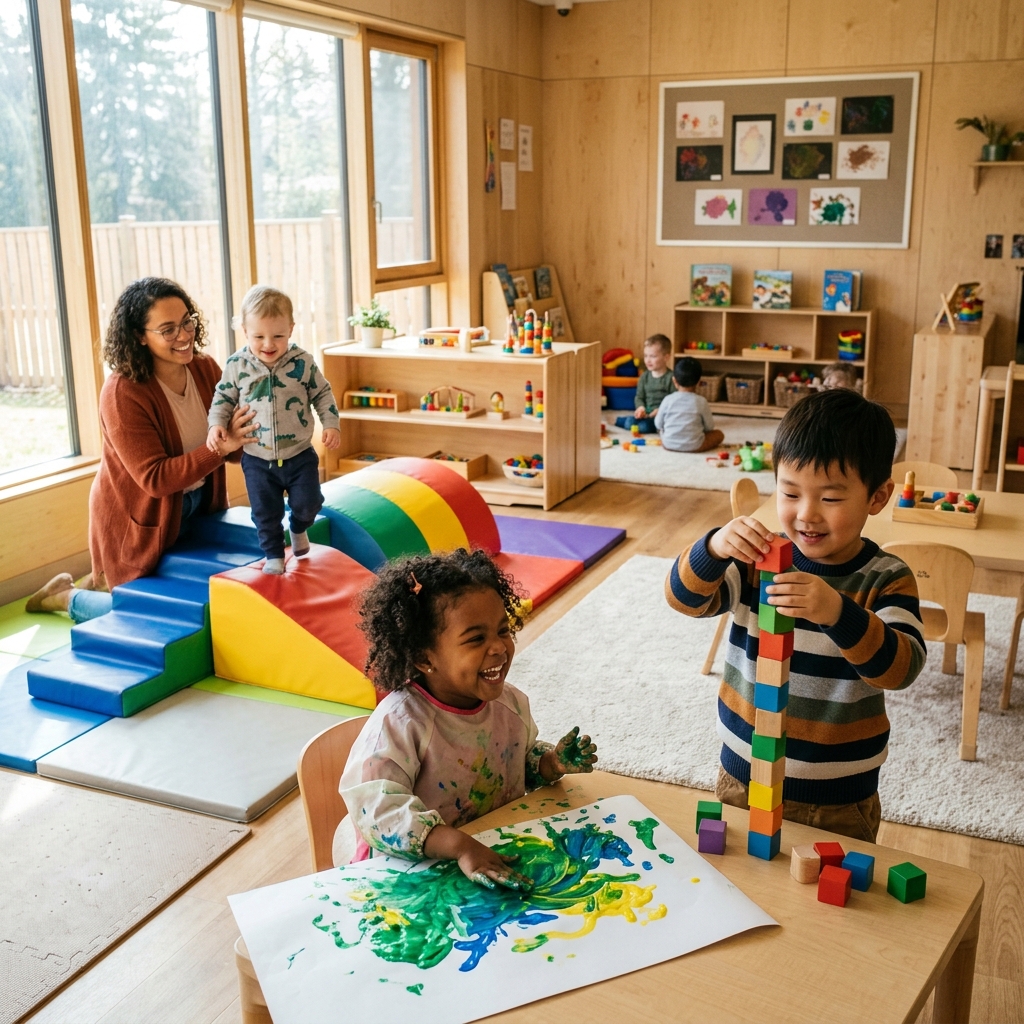
Watching your little one reach for their favorite toy, take those wobbly first steps, or proudly hold a crayon for the very first time is nothing short of magical. As a parent, you are your child’s first teacher, and witnessing these milestones brings an incredible sense of joy and pride. The early years go by in the blink of an eye, and these precious moments are more than just adorable memories; they are critical indicators of your child’s motor skill development. From the tender age of six weeks to the active preschool years up to age five, children are constantly building the physical foundations they need to explore, understand, and interact with the world around them.
Motor skills are broadly categorized into two main areas: gross motor skills and fine motor skills. Understanding the difference between the two, and knowing how to actively nurture them, can significantly impact your child’s overall growth, self-esteem, and eventual readiness for kindergarten.
Understanding Gross and Fine Motor Skills
Gross motor skills involve the larger muscles in the body, including the arms, legs, and core. These are the foundational skills that allow infants to lift their heads during tummy time, toddlers to walk, run, and balance, and preschoolers to jump, climb, and pedal a tricycle. Developing strong gross motor skills is absolutely essential for physical health, spatial awareness, and overall body coordination.
Fine motor skills, on the other hand, require the use of smaller muscle groups, particularly those located in the hands, fingers, and wrists. When your baby learns to use the pincer grasp to pick up a tiny piece of fruit, or your preschooler learns to button their coat, build a puzzle, and use safety scissors, they are exercising their fine motor skills. These precise, controlled movements are crucial for daily tasks, independence in self-care, and eventually, the ability to hold a pencil and write.
Why Motor Skill Development Matters in Early Childhood
The benefits of early childhood education extend far beyond learning the alphabet and counting numbers. A high-quality early learning environment places a strong, intentional emphasis on physical development because motor skills are deeply connected to cognitive growth. There is a powerful brain-body connection in the early years. When children engage in physical play, they are simultaneously developing problem-solving skills, critical thinking, and social-emotional intelligence.
For instance, when a child navigates an outdoor obstacle course, they are learning how to plan their movements, assess risks, and overcome physical challenges. When they sit down to thread small beads onto a string, they are building the intense focus and attention span required for later academic success. Encouraging these skills early on fosters a profound sense of independence, allowing children to feel capable, secure, and confident in their own abilities.
Practical Tips to Encourage Motor Skills at Home
Fostering your child’s physical development doesn’t require expensive toys, complicated routines, or hours of planning. Everyday activities and simple household items can easily be transformed into powerful learning opportunities. Here are some age-appropriate, practical ways to encourage motor skill development at home.
For Infants (6 Weeks to 12 Months)
In the first year of life, your baby is building the core strength necessary for rolling, sitting, and crawling. Tummy time is one of the most effective ways to support gross motor development. Start with just a few minutes a day and gradually increase the time as your baby gets stronger. Place colorful toys or an unbreakable mirror just out of reach to encourage them to stretch, pivot, and eventually crawl. To support fine motor skills, offer toys with different textures that they can easily grasp, shake, and transfer from one hand to the other.
For Toddlers (1 to 3 Years)
Toddlers are natural explorers with boundless energy and a deep curiosity about their environment. To build gross motor skills, create safe indoor obstacle courses using pillows and couch cushions for them to climb over. Take daily walks and encourage them to practice walking on different surfaces, like grass, sand, or gentle slopes. For fine motor development, introduce activities like stacking wooden blocks, playing with sensory bins filled with dry rice or beans, and finger painting. These activities strengthen hand muscles and dramatically improve hand-eye coordination.
For Preschoolers (3 to 5 Years)
As children approach school age, their movements become much more refined and purposeful. Encourage gross motor skills by visiting local parks where they can climb on playground equipment, swing independently, and practice catching and throwing a ball. Tricycles and balance bikes are also excellent tools for building leg strength and bilateral coordination. To enhance fine motor skills, provide plenty of opportunities for drawing, coloring, and using child-safe scissors to cut paper. Simple household chores, like helping to set the table, sorting socks, or folding small towels, are also fantastic, real-world ways to practice precision and control.
How Scribbles Academy Supports Your Child’s Growth
While practicing these skills at home is a wonderful bonding experience, enrolling your child in a structured, nurturing educational environment can take their development to the next level. Finding the right preschool in Katy TX can make all the difference in your child’s foundational years. At Scribbles Academy, we understand that physical development is a cornerstone of comprehensive early childhood education. Our curriculum is intentionally designed to support both gross and fine motor milestones for children ages six weeks to five years.
As a highly trusted daycare in Katy TX, we provide safe, engaging, and age-appropriate play areas where children can confidently explore and safely challenge their physical boundaries. Our dedicated, highly trained educators patiently guide infants through essential tummy time, help toddlers navigate their first climbing structures, and engage preschoolers in hands-on sensory and art activities that perfect their fine motor control. We believe that learning should be a joyful, active experience that naturally prepares children for a lifetime of success.
Every child’s developmental journey is entirely unique, and having a supportive, knowledgeable community by your side ensures they receive the best possible start in life. Whether it is celebrating those first wobbly steps across the classroom or marveling at a carefully drawn masterpiece, partnering with experienced educators can give you profound peace of mind and provide your child with the exact tools they need to thrive. We invite you to see our vibrant classrooms and dynamic play spaces in person. Reach out to Scribbles Academy today to schedule a tour, meet our passionate teachers, and discover firsthand how our tailored early education programs can nurture your child’s physical growth, boundless curiosity, and lifelong confidence.