

Watching your little one grow is one of the most magical and rewarding experiences of parenthood. From those first responsive smiles and coos at six weeks old to the vivid, imaginative stories of a dynamic five-year-old, every single milestone is a profound cause for celebration. As parents, we often spend a significant amount of time focusing on physical and cognitive milestones—like taking those wobbly first steps, speaking new words, and learning the alphabet. However, one of the most critical areas of early childhood development is often the most nuanced: building social skills. Navigating new friendships, learning how to share space and toys, and understanding complex emotions are foundational abilities. These early lessons will ultimately shape your child’s future interactions, academic success, and overall happiness in life.
Why Early Social Development Matters
The first five years of life represent a critical window for rapid brain development. When young children interact with their peers and loving caregivers, they are doing much more than simply playing; they are actively wiring their brains for empathy, effective communication, and conflict resolution. A child who learns how to express their feelings appropriately and listen to the perspectives of others is vastly better equipped to handle the social challenges of kindergarten and beyond. Early childhood education plays a pivotal role in this transformative process, providing a safe, guided, and consistent environment where children can practice these essential life skills daily.
Practical Ways to Nurture Social Skills at Home
While a high-quality early learning environment is incredibly beneficial, the journey of building robust social skills truly begins at home. Here are some practical, everyday strategies you can seamlessly incorporate into your routine to help your little one develop strong, positive social abilities.
Model Positive Interactions
Children are remarkably observant, acting like little sponges that constantly absorb the behaviors, tones, and reactions they see around them. When you consistently say “please” and “thank you,” handle daily frustrations calmly, and show genuine empathy to others, your child takes careful note. Narrating your own feelings can also be a highly effective teaching tool. Saying something like, “I feel frustrated that I spilled my coffee, but I am going to take a deep breath and clean it up,” teaches them how to process, regulate, and articulate their own big emotions in a healthy way.
Make Turn-Taking a Fun Game
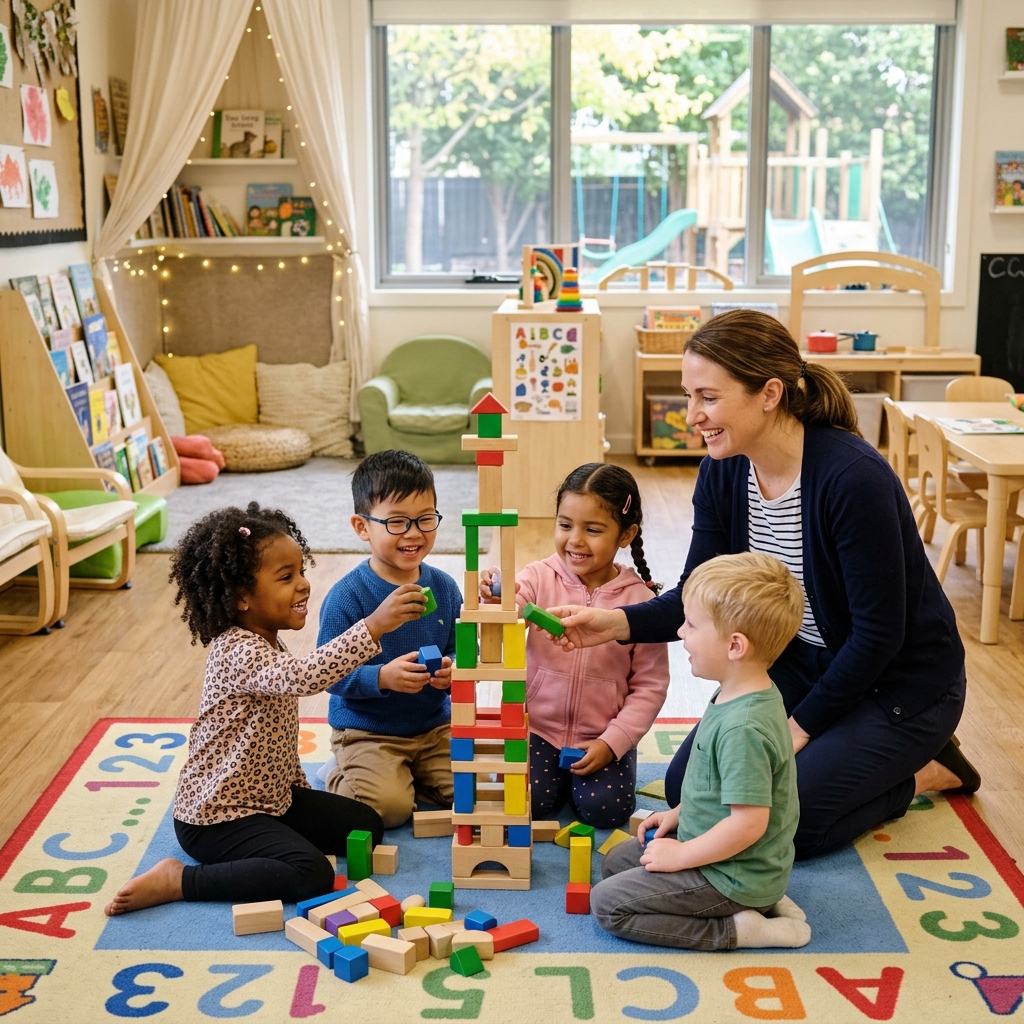
The concept of sharing is notoriously difficult for toddlers to grasp, as they are naturally egocentric at this developmental stage. Instead of forcing them to share, which can lead to tears, introduce the more manageable concept of “taking turns.” You can practice this during simple, everyday activities, like rolling a ball back and forth across the living room floor or taking turns adding colorful blocks to a growing tower. Using a visual timer for highly coveted toys can dramatically help them understand that waiting is only temporary and that they will absolutely get their turn again soon.
Arrange Meaningful Playdates
Providing regular opportunities for your child to interact with peers outside of their immediate family unit is vital for their social growth. Keep early playdates relatively short and focused on a specific activity, such as a simple craft, building with blocks, or playing at a local park. These supervised interactions allow young children to practice reading non-verbal social cues, negotiating the terms of their play, and experiencing the natural give-and-take of friendship in a supportive, low-pressure setting.
The Role of a Nurturing Environment in Social Growth
While the home is undoubtedly a child’s first classroom, a structured group setting accelerates social development in ways that are often difficult to replicate in the living room. In a classroom environment, children are naturally exposed to diverse personalities, backgrounds, and communication styles, learning to navigate a much wider social circle. They learn the essential rhythm of being part of a community—following group instructions, waiting patiently in line, and collaborating with peers on exciting projects.
This is precisely where choosing the right early education partner becomes so profoundly important. Families searching for a top-tier preschool in Katy TX understand that they are looking for much more than just basic supervision; they are seeking a vibrant community that actively fosters emotional intelligence and social confidence. At Scribbles Academy, we firmly believe that social and emotional learning is just as critical as early literacy and math. Our comprehensive curriculum is intentionally designed to create daily moments of connection, teamwork, and empathy among our students.
A Trusted Partner for Your Child’s Journey
Finding the perfect environment for your child, whether they are a tiny, dependent infant or a busy, curious pre-K student, is a major decision for any parent. You want a place that feels like a natural extension of your own family, where compassionate teachers know your child’s unique quirks and enthusiastically celebrate their individual progress. From our soothing, nurturing infant rooms that focus on building secure attachments for babies as young as six weeks, to our dynamic, engaging classrooms for five-year-olds preparing for kindergarten, every space is meticulously designed with your child’s holistic growth in mind.
For parents seeking a reliable, high-quality daycare in Katy TX, it is essential to find a center that perfectly balances academic readiness with robust social-emotional support. Teachers who gently guide children through minor peer conflicts with patience and understanding, rather than simply solving the problem for them, empower kids to become confident, independent problem-solvers. This supportive, educational approach builds the deep resilience and adaptability that children need to thrive in new environments throughout their lives.
Equipping your child with the tools they need to build meaningful, lasting relationships is one of the greatest, most enduring gifts you can give them. It takes time, immense patience, and the right village to help those little personalities blossom into kind, confident, and socially capable individuals. We would absolutely love to be a part of that supportive village and show you firsthand how our dedicated educators create a warm, engaging, and joyful environment for every single child. We warmly invite you to schedule a tour at Scribbles Academy today to see our beautiful classrooms in action, meet our passionate team of educators, and discover how we can partner with your family to lay a strong, beautiful foundation for your child’s bright future.